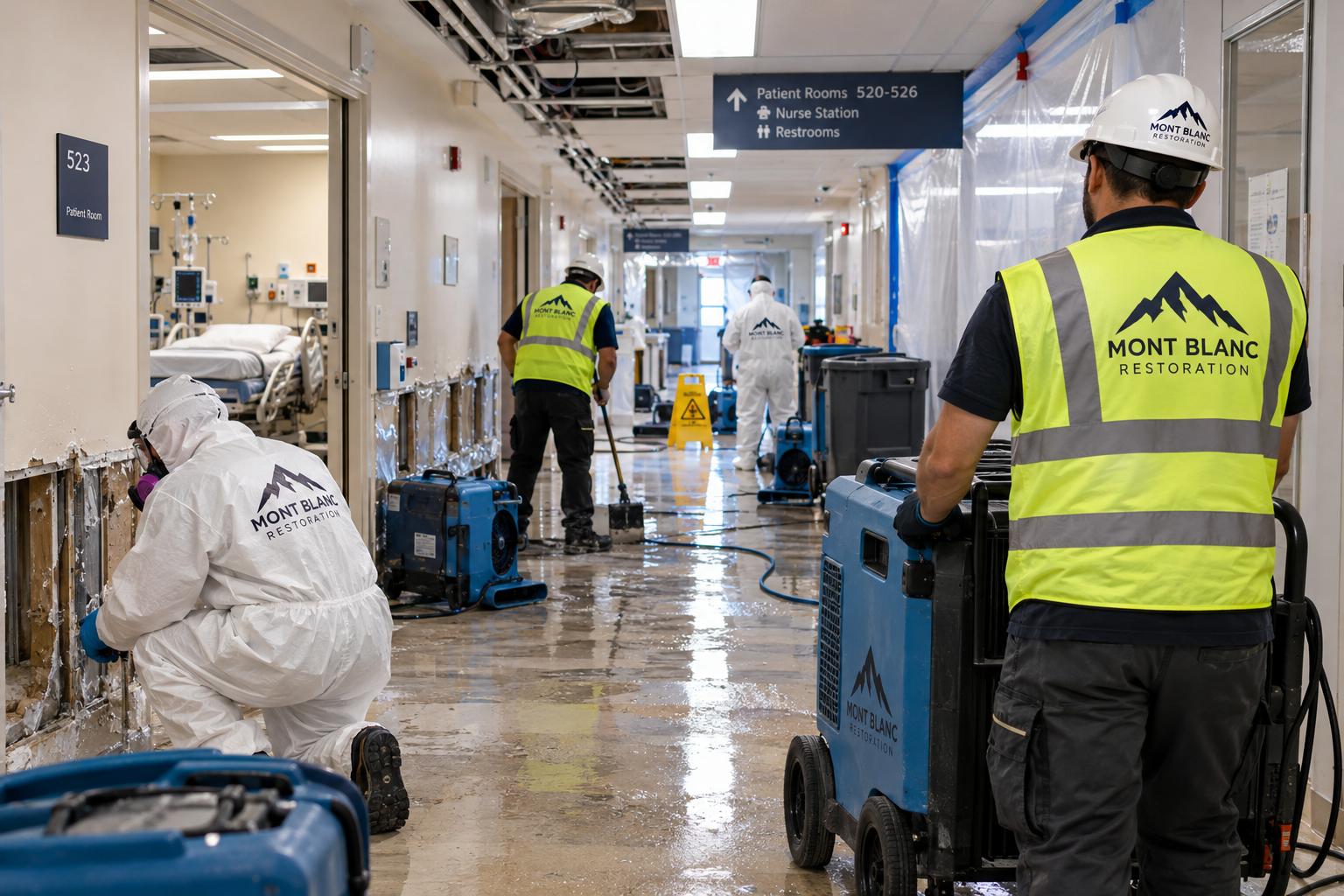
Protect occupants before protecting finishes
Water intrusion can create electrical, slip, structural, and contamination hazards. Restrict access to affected zones and keep occupants away from wet electrical equipment, sagging ceilings, and moving water. Contact emergency responders when life safety is at risk. Do not ask untrained employees to enter an unsafe space or operate damaged equipment. Designate one incident lead so building management, security, maintenance, and tenants receive consistent instructions.
Isolate the source only when it is safe
A qualified, authorized person may be able to shut off a domestic water supply or isolate a leaking branch. Fire-protection systems require particular care: never disable a sprinkler system casually. Follow the building’s impairment procedures and involve the responsible fire-protection professionals. Record when the leak was discovered, when it was isolated, and which systems remain operational. This timeline helps with both response planning and claim documentation.
Document conditions without delaying mitigation
Photograph the source, water pathways, affected rooms, finishes, and damaged contents when safe. Use room identifiers and timestamps. Preserve available maintenance records, access logs, and relevant invoices. Notify your insurer according to policy requirements, but do not assume that waiting for an adjuster is necessary before reasonable emergency mitigation. Ask the insurer about authorization, disposal documentation, and evidence retention. A contractor can document conditions; only the insurer determines coverage.
Communicate the information crews actually need
Prepare the property address, building use, affected floors, estimated area, water source, electrical status, and site-access instructions. Identify loading docks, elevator restrictions, parking, security contacts, and after-hours access. Flag sensitive operations such as patient care, food preparation, laboratories, or manufacturing lines. This information helps a restoration team select equipment and plan work zones rather than arriving without essential context.
Start a measured recovery plan
The initial assessment should consider contamination, materials, migration paths, and moisture in adjoining assemblies. Extraction, selective removal, and drying are different decisions. A carpet that feels dry does not establish that the slab, wall cavity, or insulation is dry. Request a scope identifying affected areas, proposed methods, daily monitoring, and completion criteria. Discuss occupancy, temporary services, noise, and equipment power requirements before work begins.
Separate recovery milestones from reopening
Extraction may take hours while structural drying, specialist testing, permits, and reconstruction can take substantially longer. No universal three-day promise fits every loss. Establish milestones for source correction, stabilization, drying verification, reconstruction readiness, and occupancy decisions. Track operating impacts separately for your insurer, including interruption periods and extra expenses. Reopen affected areas only after the responsible facility and safety personnel accept the required conditions.

