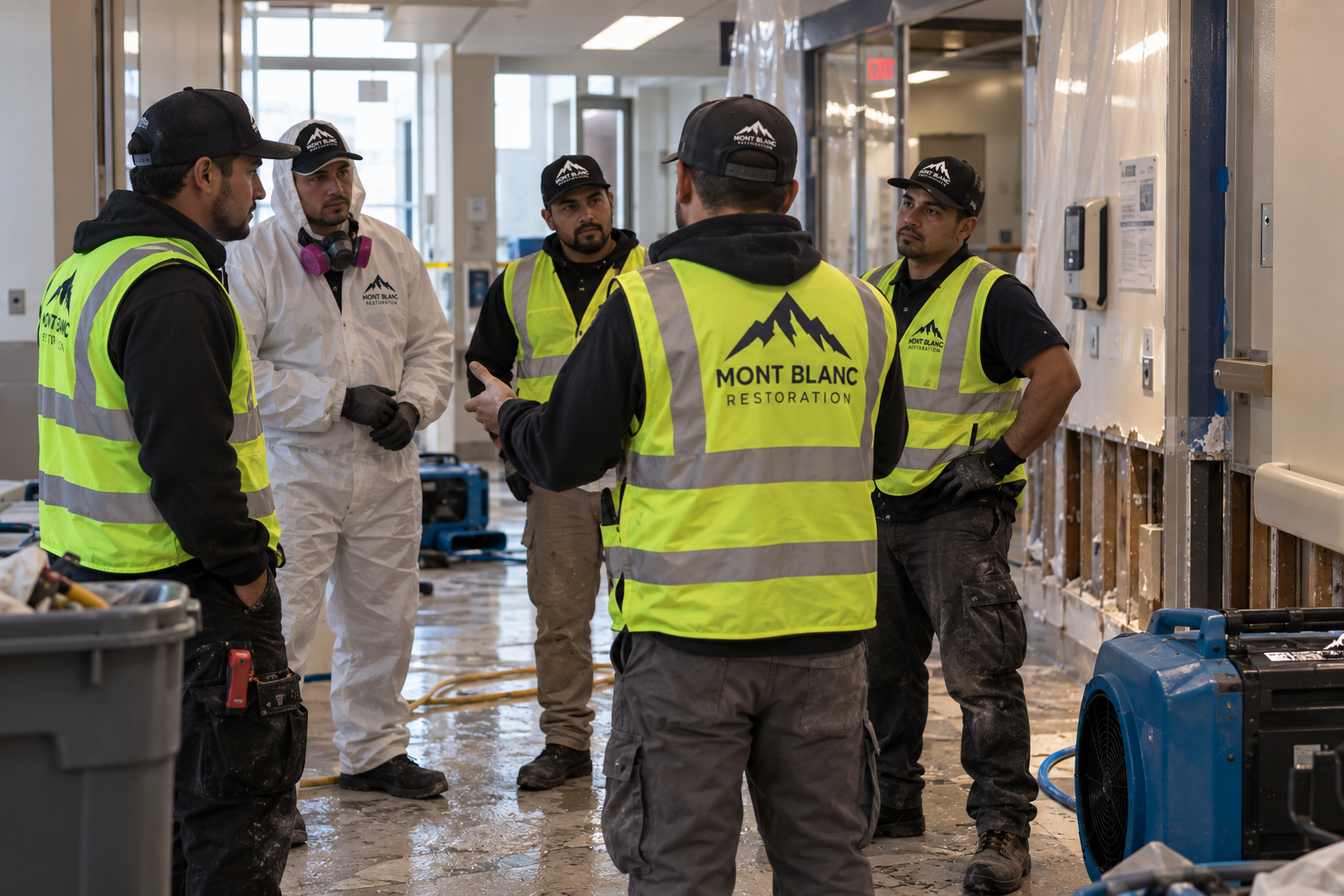
Keep traffic routes safe
Coordinate pedestrian paths, forklift lanes, docks, and exits with warehouse management. Restoration leads, barriers, and equipment must not obstruct critical circulation. Identify unstable stored goods or damaged racking before entry. Structural and racking safety require qualified evaluation; contractors should not resume material movement based only on visible floor conditions.
Segregate affected inventory
Record the location and visible condition of potentially affected goods without deciding product suitability. Packaging, porous contents, and regulated products may need specialist review or disposal instructions. Keep movement records when stock is relocated so the business can trace handling decisions. Do not mix affected goods with unaffected inventory during clearing.
Assess the slab and enclosure
Large spaces can hide localized moisture at wall bases, joints, insulation, and floor coverings. Inspect accessible assemblies and document reference readings. Air movement over a slab is not proof that a future coating or flooring installation is ready. Installation-specific moisture requirements should be confirmed with the relevant flooring or coating specialist.
Coordinate phased recovery
Agree on which zones can reopen, what monitoring remains, and how deliveries interact with work areas. Roof repairs, utility restoration, inventory evaluation, and reconstruction may control the overall schedule. Maintain moisture logs, photographs, authorized removal, and scope changes in a single record for facility and insurer review.
Frequently asked questions
Can deliveries continue during cleanup?
Discuss dock access, traffic separation, and the affected systems with management. Continued deliveries depend on a safe, authorized operating plan.
Will drying restore damaged inventory?
Not necessarily. Product condition and suitability require the responsible business or specialist evaluation, separate from building drying.
Scope and reference guidance
This page provides building-restoration planning information, not medical, legal, environmental-clearance, or insurance advice. Confirm the actual project scope and any specialist requirements with the responsible professionals.

