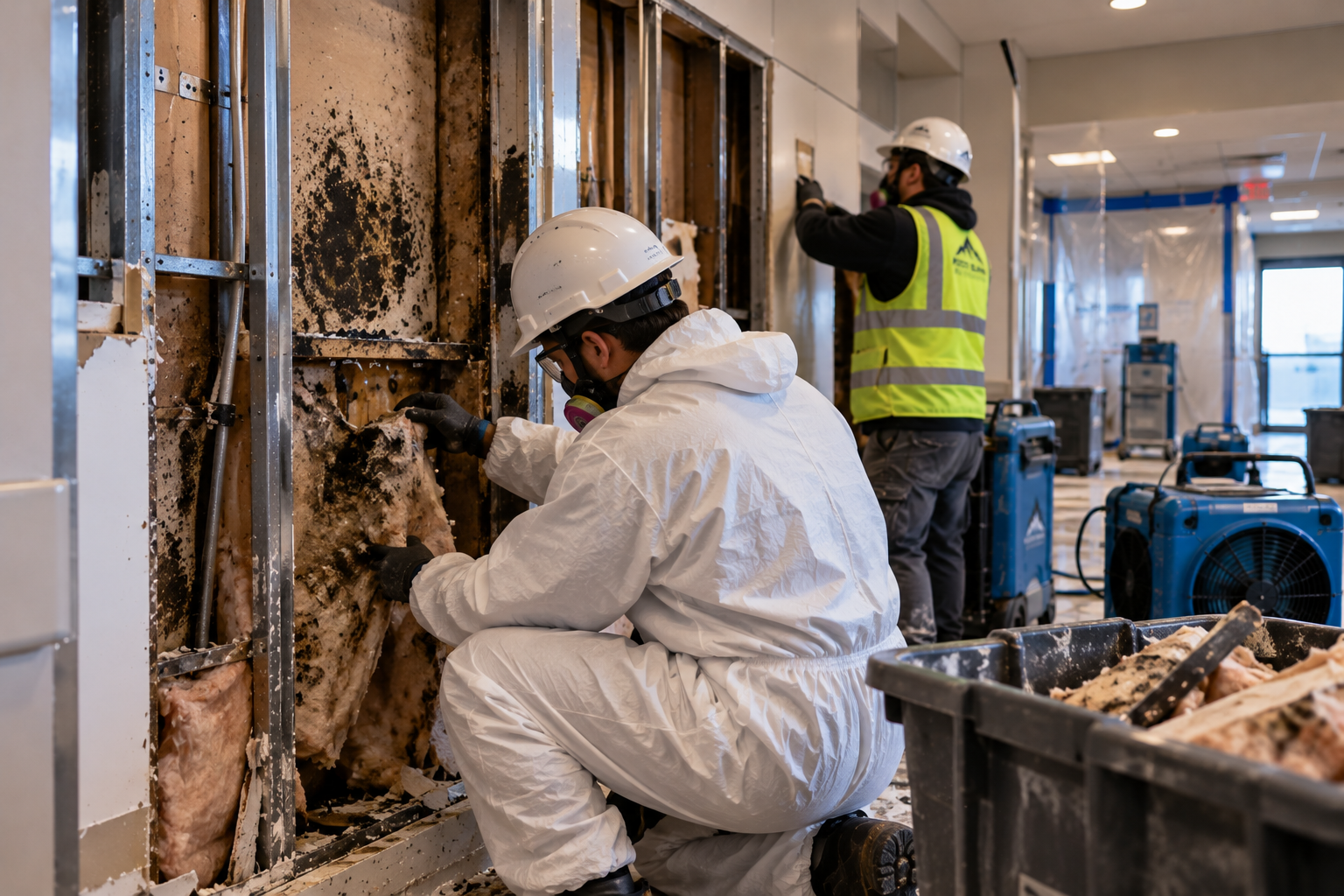
Establish administration-led communication
Identify who authorizes assessment, coordinates room access, and communicates with families or building users. Explain work-zone boundaries and changes in access without speculating about diagnoses or exposure. Separate technical observations from medical conclusions. The institution should determine relocation and occupancy with the appropriate professional input.
Assess moisture and affected materials
Document the source history, visible damage, accessible material readings, and spaces that could not be inspected. Investigate plausible migration into wall bases, ceiling cavities, flooring, and neighboring rooms. Repairing the source matters as much as cleaning the visible area. Avoid making mold species or health claims from photographs or color alone.
Plan separation and work timing
Coordinate barriers, equipment, cleaning, and debris movement around students and staff. Holidays or non-teaching periods may improve access but do not remove safety requirements. Shared ventilation and nearby occupied rooms need consideration. Any plan for partial building use depends on the loss, containment, and institutional approval.
Verify before reconstruction
Agree on material drying goals, cleaning scope, and whether independent environmental review is appropriate. Keep records of removal, measurements, source correction, and completion decisions. EPA guidance for schools and commercial buildings provides a useful reference, not a substitute for site-specific professional judgment or required institutional approvals.
Frequently asked questions
Should a classroom be closed after a leak?
The school’s responsible team should evaluate safety, moisture, contamination, and room use; visible drying alone does not settle the question.
Is air testing always required for mold concerns?
No universal test answers every case. Inspection, moisture investigation, the agreed scope, and qualified environmental advice determine whether sampling is useful.
Scope and reference guidance
This page provides building-restoration planning information, not medical, legal, environmental-clearance, or insurance advice. Confirm the actual project scope and any specialist requirements with the responsible professionals.

