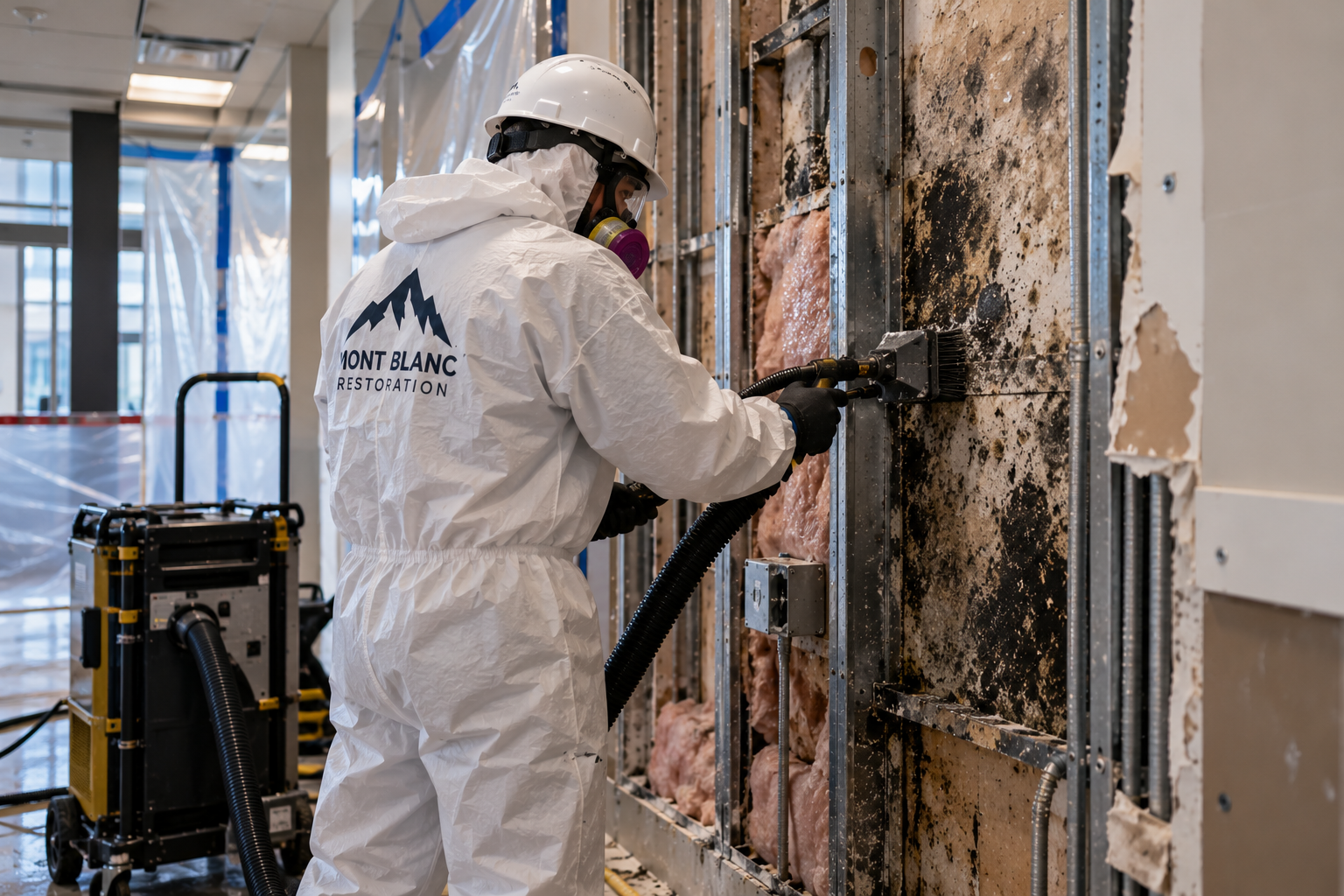
Coordinate landlord and tenant access
Identify the authorized building contact and the people responsible for each affected lease area. Shared corridors, service spaces, and mechanical systems may need assessment beyond the originating store. Obtain permission before entering neighboring units. Describe access limitations clearly so a partial inspection is not mistaken for a building-wide clearance.
Protect public circulation
Plan barriers, contractor deliveries, debris routes, and emergency exits around visitors and store operations. Work-zone boundaries should remain understandable throughout the project. Equipment noise and temporary restrictions may affect trade even outside the damaged area. Occupancy decisions require the property’s responsible team and any necessary authority involvement.
Investigate finishes and shared systems
Water can migrate under shop flooring, into partitions, or through ceiling spaces. Smoke residues can affect displays and contents differently from the building shell. Record the substrates and conditions before choosing cleaning or removal. Electrical equipment, food-service tenants, and specialized merchandise may require separate expert evaluation.
Organize tenant-specific handoffs
Keep drying goals, scope changes, contents decisions, reconstruction needs, and outstanding inspections traceable for each area. Shared-system repairs may affect several tenants’ schedules. Clear documentation supports claim communication, but lease responsibility, coverage, and lost-sales reimbursement are decisions for the appropriate parties rather than the restoration contractor.
Frequently asked questions
Can neighboring stores remain open?
Potentially, if assessment supports safe separation and shared systems and required routes remain suitable. Property management controls the authorized operating plan.
Should each tenant have a separate damage record?
Area-specific records help distinguish observed conditions and work decisions; the property team and insurers can determine how claims are organized.
Scope and reference guidance
This page provides building-restoration planning information, not medical, legal, environmental-clearance, or insurance advice. Confirm the actual project scope and any specialist requirements with the responsible professionals.

