Separate food safety from building cleanup
Keep potentially affected food and packaging out of use until the responsible food-safety personnel assess them. Document the water source and affected preparation or storage areas. Decisions about food disposal, sanitation requirements, and operating permission do not belong to a general restoration contractor. Do not assume floodwater is clean simply because it appears clear.
Evaluate surfaces and hidden spaces
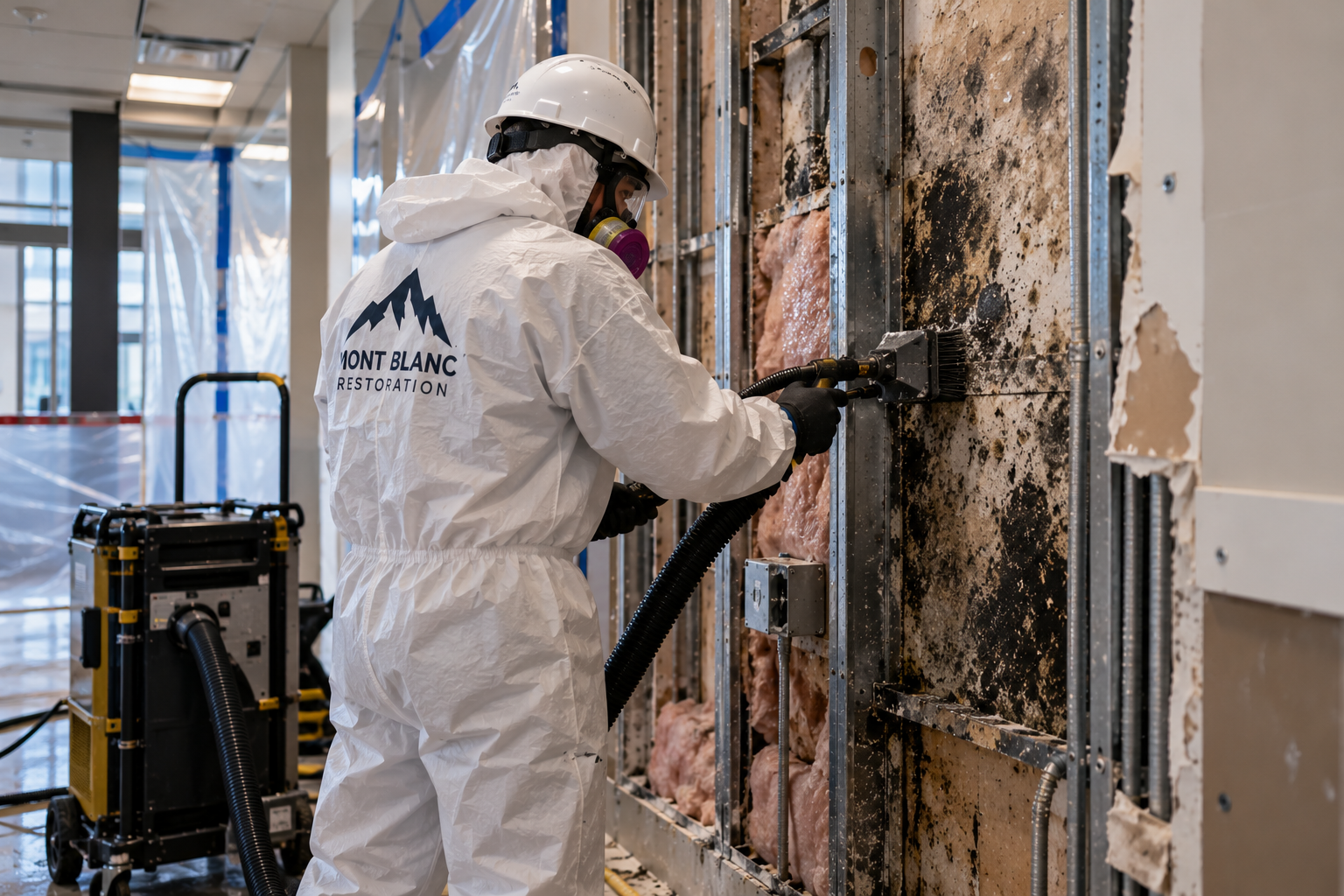
Moisture may reach wall bases, cabinets, floor transitions, and concealed areas around equipment. Assess accessible materials and note barriers to inspection. Grease residues and food debris can complicate smoke cleanup. Cleaning methods should match the substrate and loss conditions rather than applying one chemical or process throughout the kitchen.
Coordinate equipment and utilities
Refrigeration, gas appliances, electrical circuits, ventilation, and suppression systems require their own qualified checks when affected. Do not energize water-damaged equipment based on appearance. Agree on equipment movement and access before removal, and distinguish building restoration from appliance repair and required system certification.
Plan the reopening sequence
Document source repairs, removal, drying, cleaning, reconstruction, and outstanding equipment tasks. Keep affected and unaffected operations separated if the authorized plan permits partial use. Confirm who completes sanitation review and any required inspections. Restoration records support that review but do not replace regulatory approval or guarantee reimbursement for downtime.
Frequently asked questions
Does a dry kitchen mean we can reopen?
No. Food safety, equipment condition, sanitation, utilities, and any required authority approvals must also be addressed.
Is fire cleanup the same as hood-system servicing?
No. Ventilation, suppression, and cooking equipment may need separately qualified contractors and inspections.
Scope and reference guidance
This page provides building-restoration planning information, not medical, legal, environmental-clearance, or insurance advice. Confirm the actual project scope and any specialist requirements with the responsible professionals.

