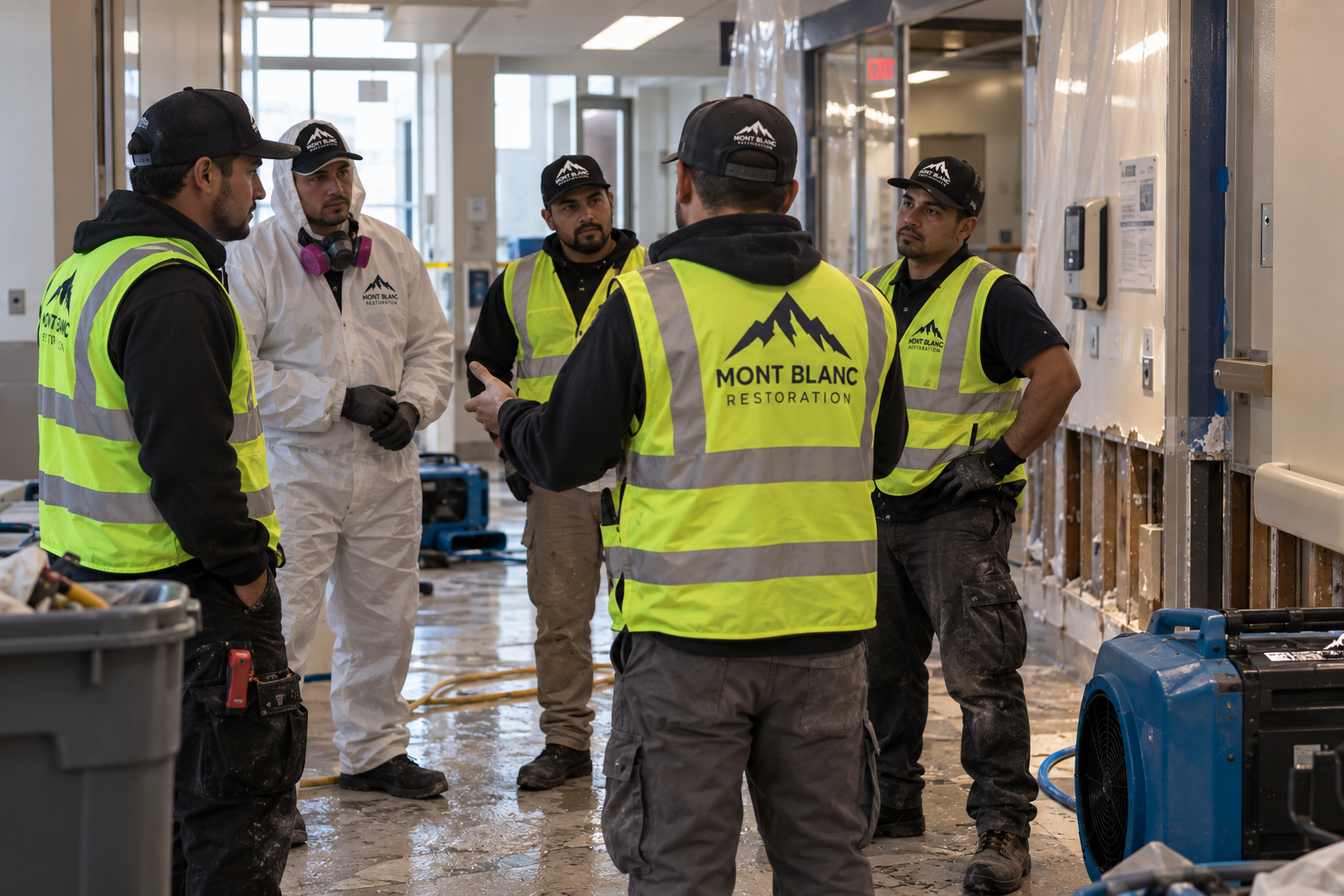
Map the building, not just the complaint
Record the source location, the visible affected area, and possible migration through ceiling plenums, risers, wall cavities, and flooring. Check accessible adjacent spaces with authorization. A carpet that feels dry does not establish that the underlayment or wall base is dry. Shared systems and multiple tenants require a coordinated inspection sequence.
Plan tenant access and work hours
Identify occupied suites, accessible entrances, deliveries, elevators, and escape routes. Decide which activities can occur during operating hours and which require an agreed after-hours window. Equipment, barriers, and electrical leads must not create new hazards. Give tenants clear information about work-zone boundaries without promising a fixed reopening date before the scope is understood.
Protect equipment and records
Document affected furniture and contents before moving them, where safe. IT systems, electrical equipment, and business records may need specialist evaluation rather than ordinary cleaning. After smoke damage, consider whether shared air distribution needs assessment. Keep restoration decisions separate from data recovery and equipment functionality determinations.
Close the work with traceable records
Collect moisture measurements, reference conditions, daily equipment records, authorized removal, and scope changes. Identify what remains for reconstruction and who approves the handoff. Property management can use these records when communicating with tenants and insurers, but the contractor does not determine lease responsibilities or insurance coverage.
Frequently asked questions
Can work be scheduled after office hours?
Discuss access and staffing with the project team. Some monitoring and safety tasks may still be needed during operating hours; scheduling depends on the actual scope.
Who coordinates a loss affecting several tenants?
The building manager should identify the authorized contact and coordinate tenant access, contractor permissions, and insurer communication.
Scope and reference guidance
This page provides building-restoration planning information, not medical, legal, environmental-clearance, or insurance advice. Confirm the actual project scope and any specialist requirements with the responsible professionals.

