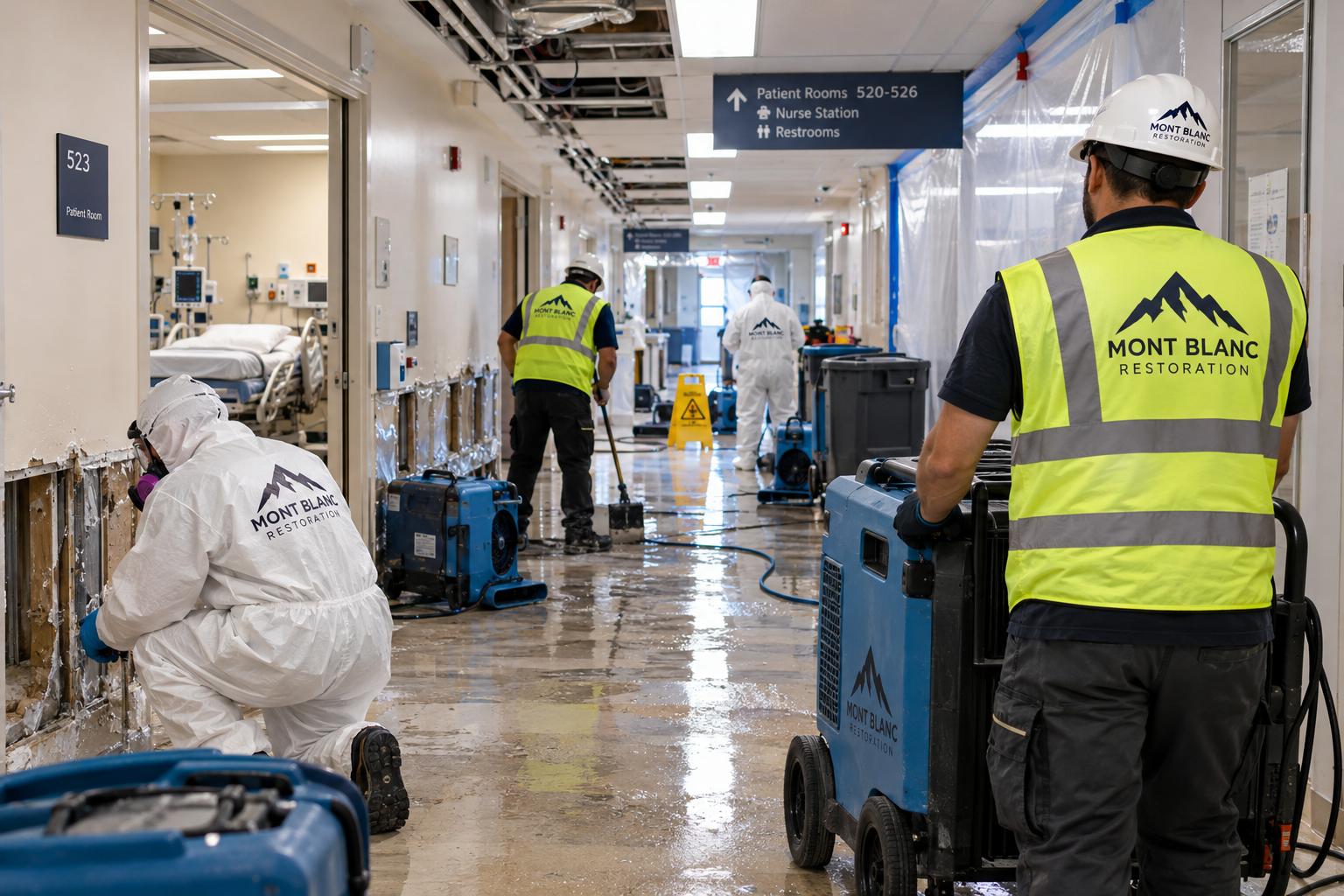
Establish the safe work boundary
Use the facility’s authorization and energy-control procedures before work around equipment or utilities. Identify restricted production areas, moving machinery, chemical storage, and potential electrical hazards. Only qualified, authorized personnel should isolate or restart industrial systems. Restoration planning must not bypass the site’s safety or environmental requirements.
Distinguish building damage from machine damage
Document affected building assemblies and visible conditions without declaring process equipment operational. Electrical cabinets, controls, production machinery, and precision instruments require qualified specialists. After smoke exposure, corrosion risks and residues may extend beyond visible soot. Record which assessments belong to the restoration scope and which remain outstanding.
Plan drying around operations
Map water migration and material moisture in accessible walls, floors, and adjacent spaces. Equipment placement depends on power availability, humidity conditions, contamination, and safe circulation. Production airflow or process heat can affect readings and drying behavior. Agree on monitoring locations and whether phased work is feasible without compromising isolation.
Document restart dependencies
Keep source correction, drying records, cleaning, specialist inspections, and reconstruction tasks in a shared handoff plan. The facility decides when production can restart, subject to its safety and regulatory responsibilities. Contractor records can support the insurer’s review, but they do not certify product quality, machine performance, or business-interruption coverage.
Frequently asked questions
Can restoration proceed while production continues?
Only if the facility-approved safety plan and actual conditions allow separated operations. Some losses require shutdown or specialist assessment first.
Do these services include hazardous-material cleanup?
Do not assume that capability. Identify substances and hazards with the facility’s EHS team and confirm an appropriately qualified scope before work.
Scope and reference guidance
This page provides building-restoration planning information, not medical, legal, environmental-clearance, or insurance advice. Confirm the actual project scope and any specialist requirements with the responsible professionals.

