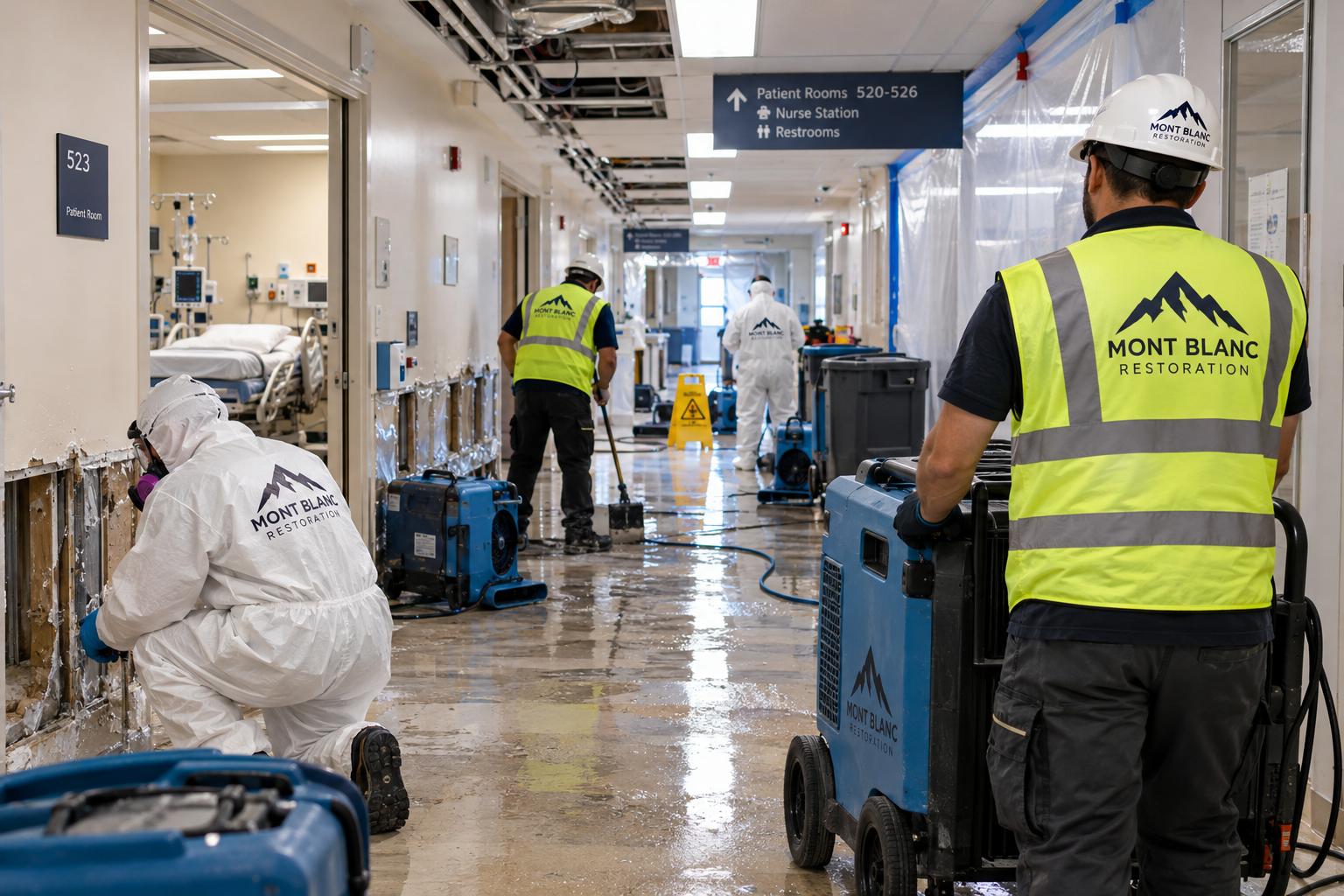
Identify hazards before access
Ask the responsible laboratory and EHS personnel to identify restricted spaces, substances, sensitive processes, and approved entry conditions. Do not disturb containers, samples, or equipment to inspect behind them without authorization. Where specialist hazards exist, appropriately qualified teams must control that work before general building-restoration activity can proceed.
Protect system boundaries
Laboratory ventilation, pressure relationships, utilities, and containment devices may serve functions that ordinary drying layouts could disrupt. Coordinate proposed equipment and barriers with qualified facility personnel. A portable HEPA unit does not certify a laboratory containment system. Any changes to specialized ventilation require responsible technical assessment and authorization.
Separate building and research losses
Document accessible affected assemblies and visible conditions while recording excluded areas. Research instruments, samples, records, and controlled materials require their own responsible evaluation. Do not infer equipment function or sample integrity from external appearance. Keep specialist reports and building-restoration measurements identified as different forms of evidence.
Agree on acceptance and restart criteria
Define source correction, material drying, cleaning, reconstruction, and specialist verification responsibilities in advance. The laboratory’s authorized team controls operational restart subject to its requirements. Building restoration records support that decision but do not establish biological safety, chemical clearance, certification, or fitness for a research process.
Frequently asked questions
Does this include biohazard cleanup?
No such capability is represented on this page. Hazardous contamination requires a separately verified and appropriately qualified specialist scope.
Can drying equipment be installed immediately?
Only after authorized facility personnel evaluate hazards, ventilation effects, power, and the permissible work area.
Scope and reference guidance
This page provides building-restoration planning information, not medical, legal, environmental-clearance, or insurance advice. Confirm the actual project scope and any specialist requirements with the responsible professionals.

