Define the affected room inventory
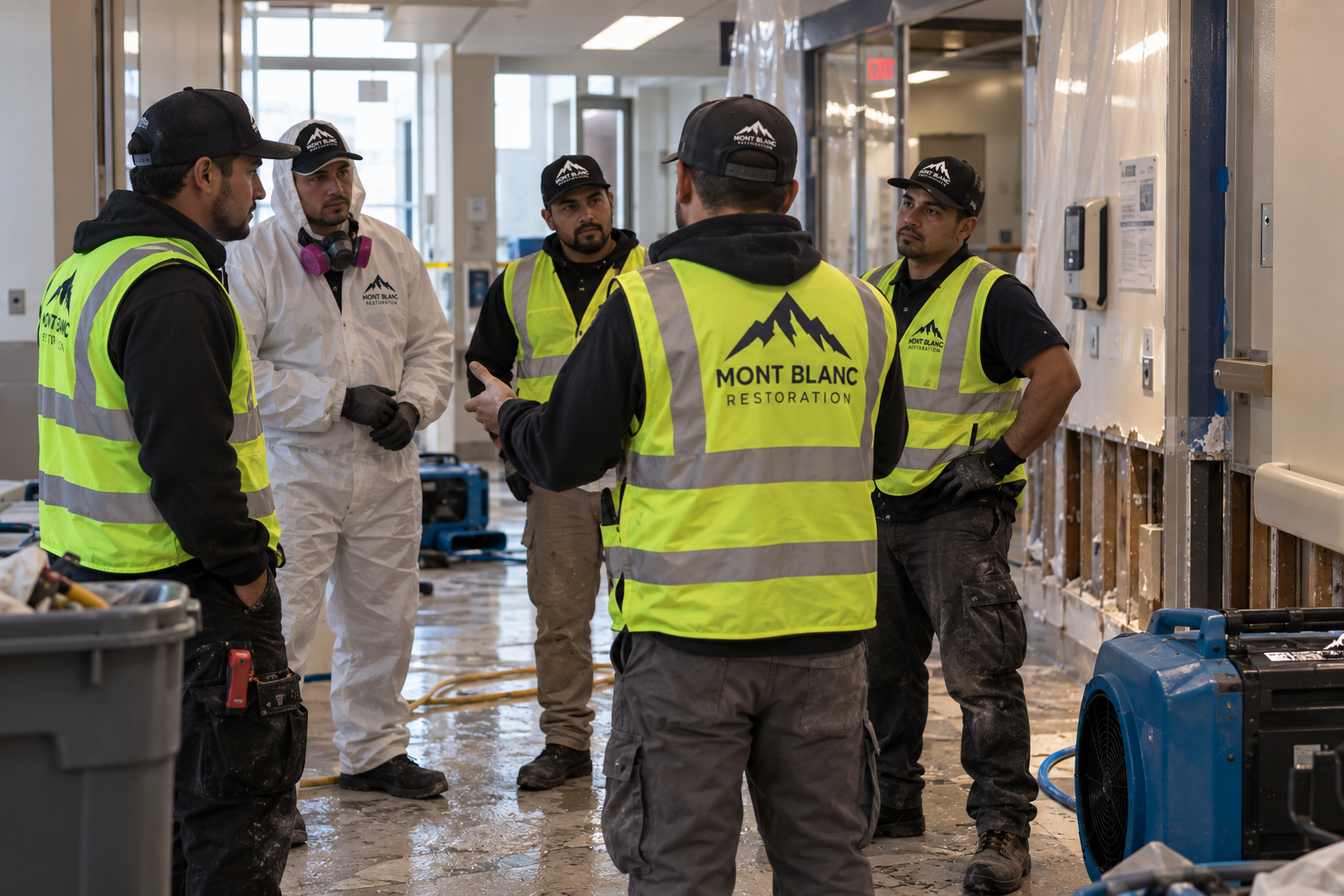
Map accessible guest rooms, corridors, adjacent units, and the floor below when the loss may have migrated. Include wall bases, concealed plumbing areas, and flooring assemblies in the assessment plan. Record unavailable rooms and inspection limitations. Do not treat a visually clean room as ready for use without considering the source and underlying materials.
Separate guests from restoration traffic
Plan equipment deliveries, debris movement, contractor entry, and emergency exits with hotel management. A service elevator or corridor may need agreed scheduling rather than unrestricted use. Barriers and signage should make work-zone limits clear. Guest communication and relocation remain management responsibilities, informed by the actual safety and access conditions.
Coordinate finishes and contents
Carpet, furniture, linens, decorative finishes, and mechanical systems have different restoration requirements. Document the condition before moving contents where safe and authorized. Smoke odor complaints may require source investigation rather than masking fragrances. Specialist equipment or electrical damage needs qualified evaluation outside a general cleaning scope.
Use staged reopening criteria
Separate drying completion, cleaning, reconstruction, system checks, and management approval. A phased approach may restore unaffected rooms earlier, but the sequence depends on site conditions and required approvals. Keep room-by-room findings, moisture trends, and scope changes organized for management and insurer review. Business-interruption decisions are policy-dependent.
Frequently asked questions
Can only the affected rooms be closed?
Possibly, if assessment supports safe separation and required routes and systems remain suitable. Hotel management and relevant authorities control occupancy decisions.
Can you promise a reopening date immediately?
A reliable schedule depends on source correction, material conditions, access, reconstruction, and inspections; it should be updated as the scope becomes clear.
Scope and reference guidance
This page provides building-restoration planning information, not medical, legal, environmental-clearance, or insurance advice. Confirm the actual project scope and any specialist requirements with the responsible professionals.

