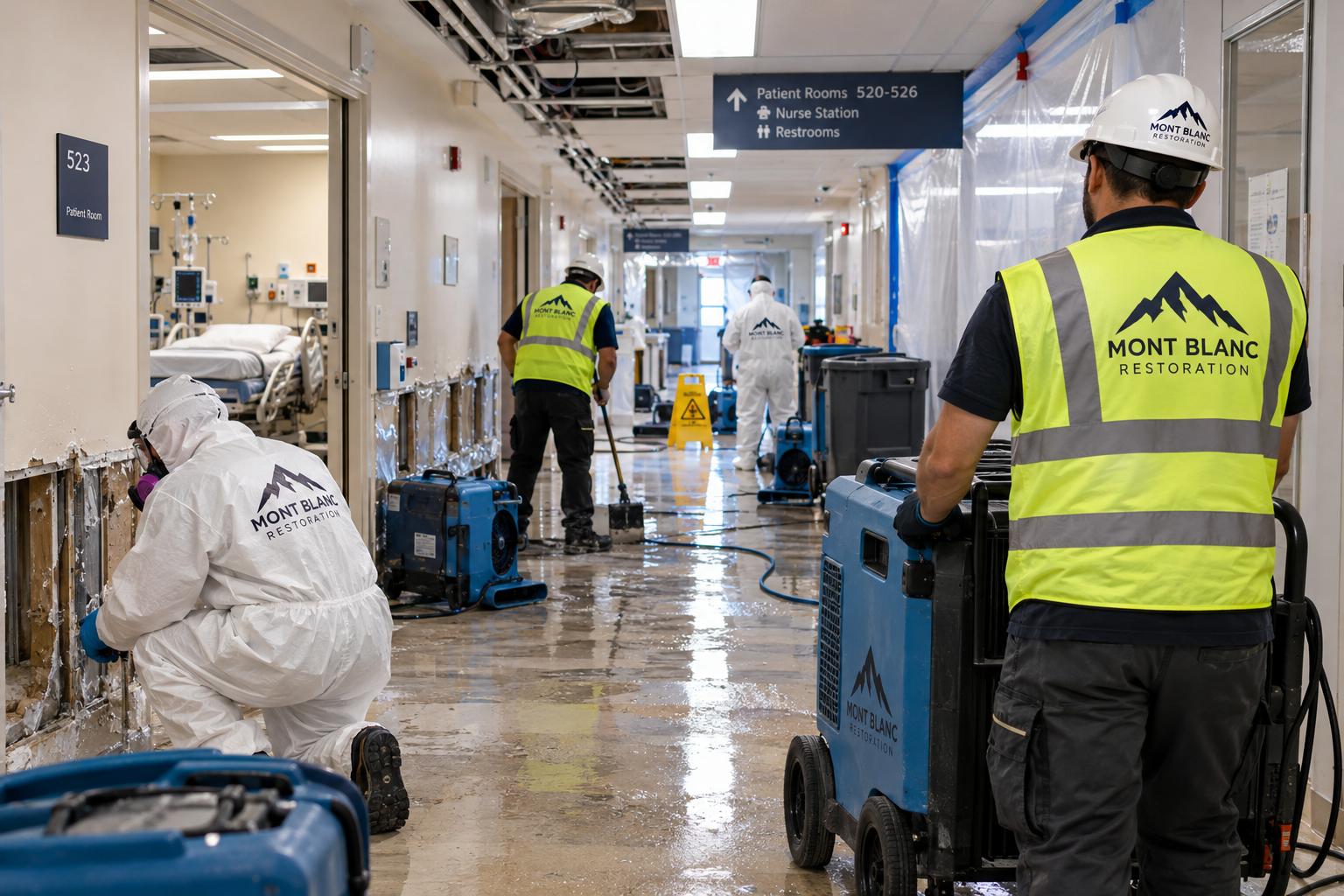
Start with facility authorization
Report the event to facilities management and the infection-prevention team before opening assemblies or moving equipment through clinical areas. Identify affected departments, vulnerable occupants, clean transport routes, and who can authorize access. Emergency medical decisions belong to the clinical team. Restoration contractors should not independently decide that a treatment space is safe to occupy.
Containment and pressure relationships
The facility’s infection-control risk assessment should inform barrier placement, dust control, debris routes, and monitoring. HEPA filtration does not replace a properly designed work zone. Coordinate air-handling changes with authorized facility personnel because an exhaust arrangement that works in one room may disrupt pressure relationships elsewhere. Record barrier inspections and changes in the affected footprint.
Investigate concealed moisture
Water can travel into ceiling cavities, wall bases, insulation, and adjacent rooms while the visible spill appears localized. Map accessible affected materials and distinguish potentially contaminated water from clean-source losses. Equipment selection and selective removal depend on the assemblies, contamination, and clinical access restrictions. Sensitive medical equipment requires its own qualified assessment.
Document the handoff
Agree on material drying targets, cleaning responsibilities, and facility-specific acceptance criteria before reconstruction. Keep daily condition records, photographs, scope changes, and access decisions together. Infection-prevention approval, engineering acceptance, and occupancy authorization are separate from a contractor’s drying records. Contact Mont Blanc to discuss the loss and confirm whether the required scope can be supported.
Frequently asked questions
Can patient care continue during restoration?
Sometimes unaffected areas can remain in use, but clinical leadership and infection-prevention personnel must decide on occupancy, separation, and patient movement. Restoration scheduling follows those requirements.
Does this include medical-equipment decontamination?
Do not assume it does. Medical devices, hazardous contamination, and specialized systems require qualified specialists and an explicitly agreed scope.
Scope and reference guidance
This page provides building-restoration planning information, not medical, legal, environmental-clearance, or insurance advice. Confirm the actual project scope and any specialist requirements with the responsible professionals.

