Investigate connected spaces
Follow plausible water pathways into the unit below, shared chases, wall cavities, and common corridors. Obtain permission before entering private units. Document inspected and inaccessible areas so the building team understands the limits of the assessment. Different floor and wall assemblies may require different drying or removal decisions.
Keep residents informed
Explain which spaces are restricted, when access is requested, and whom residents should contact with new observations. Restoration equipment can affect noise, room use, and electrical demand. Work-zone plans should account for children, pets, sensitive occupants, and accessible circulation. Housing or relocation decisions belong to the responsible owner and appropriate professionals.
Separate scope from responsibility
Record the source, observed damage, and work authorization without deciding disputed ownership or coverage questions. Unit interiors, common infrastructure, association obligations, and individual policies may involve different parties. A clear material-based scope helps those parties review the loss, but it is not a legal opinion on who must pay.
Prevent a cosmetic-only repair
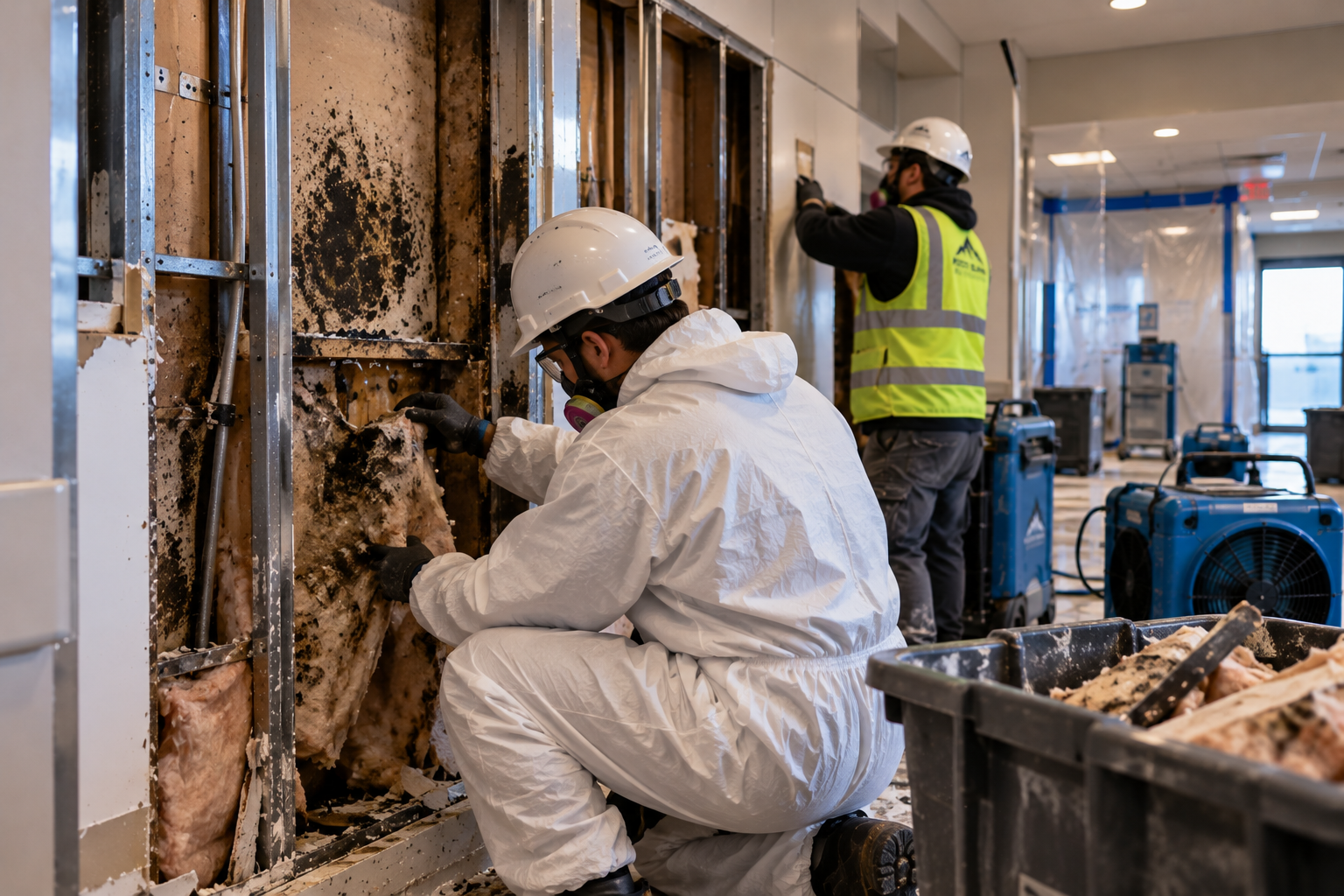
Replacing paint or baseboards before concealed assemblies are assessed can leave unresolved moisture. Identify source correction, drying goals, necessary removal, and reconstruction responsibilities. For mold concerns, plan containment and controlled cleaning around occupied areas. Track completion criteria and unresolved repair items before the final handoff.
Frequently asked questions
Should adjacent units be inspected?
If the source and building layout suggest migration, request authorized assessment of those spaces. The scope should identify any areas that could not be accessed.
Can an HOA guarantee insurance will pay?
No. Coverage and responsibility depend on the applicable policies, governing documents, and circumstances; consult the insurer and qualified advisors.
Scope and reference guidance
This page provides building-restoration planning information, not medical, legal, environmental-clearance, or insurance advice. Confirm the actual project scope and any specialist requirements with the responsible professionals.

